
Dogs and cats cannot tell us when something feels overwhelming. Instead, they communicate discomfort through changes in behavior, posture, appetite, and daily habits. Some changes are easy to notice, while others can be surprisingly subtle. Knowing your pet’s normal behavior makes these differences easier to recognize.
Understanding the signs of stress in pets can help you respond before their discomfort becomes more serious. It can also help you determine when veterinary attention may be appropriate.
At Fallston Veterinary Clinic, we understand how important pets are to families throughout Fallston. Our veterinary team provides preventive, diagnostic, dental, senior pet care, and other veterinary services.
Why Do Dogs and Cats Experience Stress?
Stress is the body’s response to situations that feel challenging, threatening, or unfamiliar. A short stress response can be normal for both dogs and cats. However, frequent or prolonged stress deserves attention. Pets may experience stress when their surroundings, routines, social relationships, or physical comfort change.
Common triggers can include:
- Moving into a new home
- Changes to the household routine
- New pets or family members
- Loud noises, storms, or fireworks
- Unfamiliar people or animals
- Boarding or traveling
- Veterinary appointments
- Being left alone
- Changes in feeding schedules
- Pain, illness, or physical discomfort
Every animal responds differently. Something harmless to one pet may feel overwhelming to another.
What Are Common Signs of Stress in Dogs?
Dogs communicate heavily through body language. Therefore, small changes in posture can provide important clues about their emotional state.
Changes in Body Language
A stressed dog may suddenly appear tense or uncomfortable. You might notice:
- A tucked or lowered tail
- Ears pulled backward
- Frequent lip licking
- Repeated yawning without tiredness
- Showing more of the whites of the eyes
- Trembling or shaking
- Excessive panting without exercise or heat
- A stiff or frozen posture
- Turning the head or body away
Context is important when evaluating these behaviors. For example, panting after exercise is normal but may mean something different while resting.
Changes in Behavior
Stress can also change how your dog behaves around people, animals, and familiar environments. Your dog might begin pacing or struggle to settle down. Some dogs become unusually clingy, while others prefer isolation.
Whining, barking, hiding, growling, or attempting to escape may also indicate discomfort. A normally social dog might suddenly avoid interaction. Never punish growling. Growling can be an important warning that your dog feels uncomfortable and needs more space.
Changes in Eating and Bathroom Habits
Emotional distress can sometimes affect a dog’s normal eating and elimination patterns. A stressed dog may refuse food or treats. Some dogs may also experience vomiting, diarrhea, or changes in bathroom habits.
These symptoms can also indicate medical conditions. Persistent changes should therefore be discussed with your veterinarian.
What Are Common Signs of Stress in Cats?
Cats can be especially subtle when something is wrong. Their natural tendency to hide discomfort can make early recognition challenging. Learning the signs of stress in pets becomes especially important when caring for cats.
Hiding More Than Usual
Many cats enjoy quiet hiding places. However, suddenly spending significantly more time hidden can signal discomfort. A stressed cat may hide under furniture or avoid family members. They might also stop entering rooms they previously enjoyed. Pay attention when hiding occurs alongside appetite, grooming, or litter box changes.
Changes in Body Language
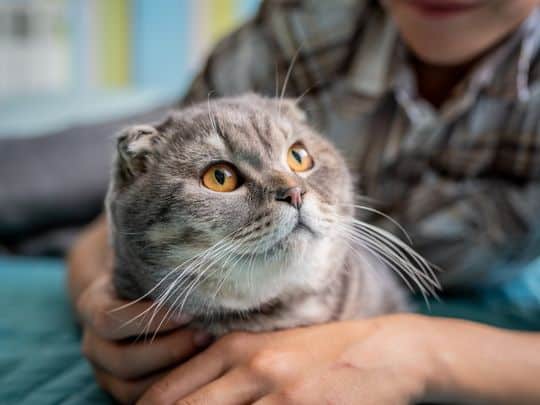
Your cat’s ears, eyes, tail, and posture can provide valuable information.
Possible stress-related changes include:
- Dilated pupils
- Flattened or sideways ears
- A low or crouched posture
- A tucked or rapidly flicking tail
- Flattened or unusually forward whiskers
- Tense muscles
- Attempts to escape
- Hissing, growling, or swatting
These behaviors should not automatically be viewed as a personality problem. They may indicate fear, anxiety, pain, or another source of discomfort.
Grooming and Appetite Changes
Some stressed cats groom themselves excessively. Others may reduce grooming and develop an untidy coat. Changes in appetite can also occur. A cat might eat less, refuse favorite treats, or avoid the feeding area.
A prolonged loss of appetite requires veterinary attention. Medical problems should be considered before assuming stress is the only cause.
Litter Box Changes
Stress can sometimes accompany changes in a cat’s urinary or litter box behavior. You might notice inappropriate urination, frequent litter box visits, or reluctance to use the usual box.
Urinary changes can also indicate serious medical problems. Straining or difficulty passing urine requires prompt veterinary attention.
How Can You Tell Stress From a Medical Problem?
This distinction can be difficult because behavioral and medical problems can produce similar symptoms. Pain can cause hiding, irritability, trembling, appetite changes, or unusual aggression. Digestive, urinary, hormonal, and neurological conditions may also change behavior.
Consider whether the behavior appeared suddenly. Also note whether your pet has additional physical symptoms. Keeping notes about behavioral changes can be helpful. Record when symptoms happen, how long they last, and possible triggers. A veterinary examination can help identify or rule out physical causes.
How Can You Help a Stressed Dog or Cat?
Your first goal should be identifying the possible trigger. Removing or reducing that trigger may help your pet feel more secure.
Create a Quiet Retreat
Give your pet somewhere comfortable to withdraw without interruption. Dogs may prefer a quiet bed or familiar room. Cats often benefit from covered hiding areas and elevated resting spaces. Family members should respect this space and avoid forcing interaction.
Maintain a Predictable Routine
Consistency can help pets understand what to expect each day. Try maintaining regular schedules for meals, walks, play, bathroom breaks, and bedtime. Introduce unavoidable changes gradually whenever possible.
Provide Appropriate Physical and Mental Activity
Healthy dogs often benefit from regular walks, play sessions, and safe opportunities to explore. Cats need opportunities to climb, scratch, hide, chase, and play. Interactive toys can encourage natural behaviors and provide healthy mental stimulation. Activities should always match your pet’s age, health, mobility, and individual preferences.
Avoid Forcing Interaction
A frightened pet may need distance rather than additional handling. Allow your pet to approach people or animals voluntarily whenever safely possible. Watch their body language throughout the interaction. If they move away, freeze, hide, or become tense, give them additional space.
When Should You Contact a Veterinarian About Your Pet’s Stress?
Occasional nervousness during an unfamiliar situation may resolve once the trigger disappears. Persistent or unexplained behavioral changes deserve closer attention.
Schedule a veterinary visit when your pet:
- Stops eating or drinking normally
- Develops repeated vomiting or diarrhea
- Suddenly becomes unusually aggressive
- Hides for prolonged periods
- Experiences significant bathroom changes
- Shows possible signs of pain
- Cannot settle or relax
- Experiences worsening behavioral changes
- Has symptoms without an obvious trigger
Recognizing the signs of stress in pets early can help you make informed decisions about their care.
Help Your Pet Feel Comfortable and Secure
Your pet’s behavior provides valuable information about their physical and emotional well-being. Even small changes can deserve attention when they persist or appear unexpectedly.
Fallston Veterinary Clinic has served pets and families in Harford County for decades. Our veterinary team understands that every animal has individual health and comfort needs.
If your dog or cat develops concerning behavioral changes, we can help investigate possible underlying causes. Our veterinary evaluation can also guide appropriate next steps for your pet. Contact us to schedule your pet’s veterinary appointment.
Frequently Asked Questions
1. What are the first signs that a dog is stressed?
Ans: Early signs can include lip licking, yawning, panting, looking away, pacing, or pulling the ears backward. Some dogs may also refuse treats or become unusually restless.
2. How can I tell if my cat is stressed or simply hiding?
Ans: Consider whether the hiding behavior differs from your cat’s normal routine. Appetite, grooming, litter box, or personality changes can indicate a larger concern.
3. Can stress cause physical symptoms in dogs and cats?
Ans: Stress can accompany digestive upset, appetite changes, excessive grooming, and altered bathroom habits. However, medical conditions can cause similar symptoms and should be ruled out.
4. Can moving to a new home stress my pet?
Ans: Yes. New smells, sounds, rooms, people, and routines can feel unfamiliar. Provide familiar belongings and allow your pet time to explore gradually.
5. Can dogs and cats become stressed when left alone?
Ans: Some pets experience distress when separated from their family members. Signs can include vocalization, destructive behavior, pacing, elimination problems, or excessive grooming.
6. How long does it take for a stressed pet to calm down?
Ans: Recovery time depends on the animal, trigger, and severity of the response. Mild stress may resolve quickly, while recurring anxiety can require professional guidance.
7. When should I take my stressed pet to the veterinarian?
Ans: Contact your veterinarian when behavioral changes persist, worsen, appear suddenly, or occur with physical symptoms. Veterinary evaluation can help determine whether illness, pain, or another condition contributes.