Complete Care for Your New Puppy
Welcome to Fallston Veterinary Clinic, and congratulations on your new puppy! We are so excited to welcome you and your newest family member to our veterinary family.
For more than four decades, Fallston Veterinary Clinic has been proud to serve pets and families throughout Harford County and the surrounding Maryland communities. Our story began with a simple goal: to provide first-rate veterinary care while treating every pet and every family with the kindness and respect they deserve. Over the years, our practice has grown and evolved, but that mission has remained at the heart of everything we do.
Today, our team combines years of experience with modern veterinary medicine to provide comprehensive care for pets at every stage of life. From preventive wellness visits and vaccinations to surgery, diagnostics, and specialized treatments, we are here to help your puppy get the healthiest possible start. Our veterinarians and staff continue to pursue education and stay current with advances in veterinary medicine so we can provide the best care possible for the pets who depend on us.
But veterinary medicine is about more than medicine. It is about relationships. We believe your veterinarian should be a trusted partner as you navigate the joys, questions, and occasional challenges of raising a puppy. Our goal is to give you the knowledge and confidence you need to make the best decisions for your new companion while providing a welcoming place where you and your pet always feel like family.
Your Puppy’s Journey Starts Here
This Puppy Kit was created to help you feel prepared for the exciting journey ahead. Inside, you will find information about preventive care, nutrition, vaccines, parasite prevention, training, spaying and neutering, and many of the questions that come with being a new puppy parent.
We are honored that you have chosen Fallston Veterinary Clinic to care for your new best friend. Thank you for trusting us to be part of your puppy’s life. We look forward to watching them grow from a curious little puppy into a happy, healthy lifelong companion.
Starting Your Puppy’s Life on the Right Paw
Puppy's First Visit
Welcome your new puppy with a gentle exam, expert guidance on parasite prevention, feeding tips, and a clear plan for future wellness and socialization.
Learn more
House Breaking
Learn how to build a calm, consistent potty-training routine using positive reinforcement, frequent breaks, and clear expectations.
Learn more
Heartworm Disease and Protection
Protect your puppy from mosquito-borne heartworm disease with year-round prevention starting by 8 weeks of age.
Learn more
Protecting Your Puppy from Intestinal Parasites
Protect your puppy from internal parasites with early deworming and routine stool testing.
Learn more
Puppy Nutrition
Fuel healthy growth with expert advice on choosing the right puppy food, managing feeding schedules, handling treats, and avoiding dangerous foods.
Learn more
Pre-anesthetic Blood Screening
Ensure your puppy is ready and safe for anesthesia with simple baseline blood work that uncovers hidden health concerns before a procedure.
Learn more
Spaying or Neutering Your Dog
Navigate the timing of spaying or neutering with personalized guidance based on your puppy's breed, size, lifestyle, and long-term health.
Learn more
Puppy Vaccine Guide
Build essential immunity against serious diseases with a customized core and lifestyle vaccine schedule designed for your puppy's unique risk factors.
Learn more

1. Puppy's First Visit
🐾 🎉 Congratulations on your new puppy—and welcome to the Fallston Veterinary Clinic!
We are so excited to meet your newest family member and to be part of this joyful beginning. Take plenty of photos, soak up the snuggles, and enjoy every wiggly, curious moment—these first few months go by quickly! This is also an important time to build healthy habits, confidence, and trust. Our team is here to help your puppy get off to the happiest, healthiest start possible.
At today’s visit, the veterinarian will give your puppy a thorough exam, answer your questions, and talk with you about simple ways to keep your new best friend thriving. We’ll review parasite prevention, including heartworm disease, fleas and ticks, and intestinal worms; discuss feeding guidelines; and create a clear plan for future progress exams and vaccine boosters.
This is a wonderful time to help your puppy feel comfortable, confident, and loved. Gently handle your puppy’s ears, paws, and mouth so routine care feels easier, and be sure to reward calm, cooperative behavior with praise, treats, and affection. Socialization is one of the greatest gifts you can give your puppy. Safe, positive experiences with new sights, sounds, smells, kind people of all ages, and healthy, well-vaccinated dogs can help your puppy grow into a happy, well-adjusted adult. Leash training is helpful, too—even puppies with fenced yards benefit from learning that a leash can be safe and fun.
At Fallston Veterinary Clinic, we strive to make every visit feel welcoming, gentle, and positive. With loving guidance, thoughtful socialization, and consistent veterinary care, we look forward to helping your new best friend stay happy and healthy for years to come.

2. House Breaking
Congratulations on your new puppy! Bringing home a new family member is exciting, and it is normal to have questions as you begin housebreaking. The good news is that puppies learn best with a calm routine, lots of encouragement, and clear expectations. These tips are here to help you feel confident while you teach your puppy where and when to go potty.
Start early, and be consistent.
The best time to begin housebreaking is usually around 7 to 8 weeks of age. At this age, puppies are ready to start learning the routine before they develop their own habits. If your puppy is older, that is okay—housebreaking may take a little more time, but patient, consistent training can still be very successful.
Plan frequent potty breaks
Use a simple cue word or phrase
Reward your puppy right away
Watch for signs your puppy needs to go
Feed on a schedule
Make the crate a safe, positive place
Do not punish after an accident
Clean accident areas thoroughly
Stick with the routine
A note from Fallston Veterinary
Housebreaking takes time, and every puppy is different. Celebrate the small wins, be patient through the accidents, and remember that we are here to support you and your new best friend along the way.
3. Heartworm Disease and Protection
Heartworm Disease is a serious illness that can affect dogs, cats, and ferrets. It’s caused by worms that are spread by mosquito bites. Over time, these worms can damage the lungs, heart, and other organs. The good news is that heartworm disease is much easier to prevent than it is to treat. Year-round prevention, yearly heartworm testing, and reducing mosquito exposure all help keep your puppy protected.
Why Prevention Matters for Puppies
Start Protection by 8 Weeks
Puppies may look perfectly healthy, but they can still be at risk for heartworm disease. Because mosquitoes can carry heartworms and heartworms have been found in all 50 states, every puppy needs protection. The American Heartworm Society recommends starting puppies on a heartworm preventive as early as the product label allows, and no later than 8 weeks of age.
Dose by Weight, Not Age
Partner With Us as Your Puppy Grows.
Keep Prevention Simple and Consistent
Starting heartworm prevention early and giving it consistently is one of the best ways to protect your puppy’s long-term health. We are happy to help you choose a safe, effective option and keep your puppy on track.

4. Protecting Your Puppy from Intestinal Parasites
At Fallston Veterinary Clinic, we know how exciting it is to welcome a new puppy into your family. Intestinal parasites are common in dogs and can be found in every part of the country, including our local community. The good news is that routine prevention, deworming, and stool testing help us keep your puppy healthy and help protect the people in your home, too.
How do pets become infected?
Dogs and cats of any age can get intestinal parasites, but puppies and kittens are especially at risk. Some puppies can have worms as early as 2 to 3 weeks of age. Parasites may be passed from mother to puppy before birth or through the mother’s milk shortly after birth. This is why our Fallston Veterinary Clinic team recommends early deworming and checking a stool sample as part of your puppy’s first visits with us.
Roundworms and Hookworms
Coccidia
Coccidia is a tiny, single-celled parasite that lives in the intestinal tract. It commonly causes watery or mucus-like diarrhea and may sometimes cause blood in the stool. Puppies are more likely to become seriously ill because their immune systems are still developing. If diarrhea is not treated early, puppies can become weak, dehydrated, and very sick. Please contact Fallston Veterinary Clinic if your puppy has diarrhea, especially if it continues, contains blood, or your puppy seems tired or is not eating well.
Giardia
Whipworms and Tapeworms
At Fallston Veterinary Clinic, we recommend Interceptor Plus® for heartworm prevention because it also helps control roundworms, hookworms, and whipworms. Please give this medication exactly as directed by our team, and let us know if you have any questions about parasite prevention for your puppy.
5. Puppy Nutrition
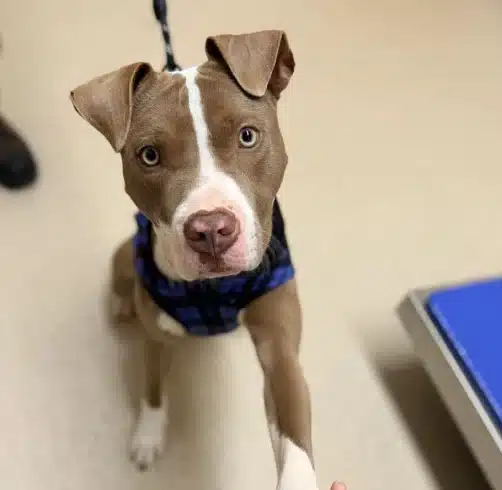
One of the most important things you can do for your new puppy is to provide a complete and balanced diet that supports healthy growth. Puppies grow quickly, and their nutritional needs are different from those of adult dogs. Choosing the right food, feeding the right amount, and establishing a consistent routine can help your puppy grow into a strong, healthy adult.
Choosing the Right Puppy Food
We recommend feeding a complete and balanced puppy food that is appropriate for your puppy’s age and expected adult size. Puppy foods are specially formulated to provide the calories, protein, vitamins, and minerals needed during growth.
At Fallston Veterinary Clinic, some of the food brands we commonly recommend include Royal Canin, Hill’s, and Purina. These companies offer a variety of diets designed to meet the nutritional needs of growing puppies.
When choosing a food, look for:
- A diet formulated for puppies: Your puppy needs a diet designed specifically for growth.
- The right diet for your puppy’s size: Small, medium, and large-breed puppies can have different nutritional needs.
- A complete and balanced formula
- A reputable manufacturer: We recommend choosing companies with strong quality-control programs and veterinary nutrition expertise.
- A diet that works for your individual puppy:
- Your puppy’s breed
- Size
- Health
- Activity level
- Body condition all play a role.
What About Grain-Free Diets?
At Fallston Veterinary Clinic, we recommend grain-inclusive diets for puppies unless there is a specific medical reason to choose otherwise.
This recommendation is based in part on ongoing concerns about a possible association between certain diets—many of which are grain-free and contain high amounts of peas, lentils, other legumes, —and dilated cardiomyopathy (DCM), a type of heart disease in dogs that has been reported in some cases. The FDA has investigated this potential association, and the exact relationship between diet and DCM is still being studied. Grains such as rice, corn, barley, and oats can be nutritious sources of carbohydrates and other nutrients for dogs. There is no general nutritional requirement for dogs to eat a grain-free diet. If you are considering a grain-free diet for your puppy, please talk with us first so we can help you make an informed decision.
Your Puppy’s Personalized Feeding Plan
Every puppy is different, and the feeding directions printed on a food bag are only a starting point. Puppies grow at different rates, and their calorie needs can vary based on their breed, expected adult size, activity level, age, and body condition.
At Fallston Veterinary Clinic, we will create a feeding guideline for your puppy based on the specific food you are feeding. We will help you determine how much to feed and how often to feed it, and we can adjust the plan as your puppy grows.
We will also monitor your puppy’s weight and body condition during wellness visits to make sure they are growing at a healthy rate.
Remember: A growing puppy should be lean, not chubby. You should be able to easily feel your puppy’s ribs without them being prominently visible.
How Often Should I Feed My Puppy?
Young puppies generally do best with several smaller meals throughout the day.
A general guideline is:
- 8–12 weeks: 3–4 meals per day
- 3–6 months: 3 meals per day
- 6–12 months: 2 meals per day
Your puppy’s breed, size, and individual needs may require a different schedule. We will help you create a feeding routine that works for your puppy and your family.
Treats & Table Scraps
Treats are a wonderful way to reward your puppy and strengthen your bond, especially during training. However, treats should be given in moderation and should not replace a balanced diet. A good rule is to keep treats and other extras to no more than about 10% of your puppy’s daily calories.
Be careful with table scraps. Some human foods can be unhealthy or even dangerous for dogs. Never give your puppy chocolate, grapes or raisins, onions, garlic, xylitol, or alcoholic beverages. When in doubt, ask us before sharing!
Don’t Forget Fresh Water
Your puppy should always have access to fresh, clean water. Puppies can become dehydrated more quickly than adult dogs, especially during warm weather or periods of increased activity. Keep a clean water bowl available throughout the day and wash it regularly.
What About Supplements?
Most puppies eating a complete and balanced puppy food do not need additional vitamins or supplements. Adding extra calcium or other nutrients without veterinary guidance can be harmful to a growing puppy, particularly in large-breed dogs.
Please talk with us before adding any supplement to your puppy’s diet.
A Note About Large-Breed Puppies
If your puppy is expected to become a large or giant breed, nutrition is especially important. Growing too quickly or receiving too many calories or minerals can contribute to developmental problems. Large-breed puppies should be fed a diet specifically formulated for large-breed growth, and their weight and growth should be monitored regularly.
Puppy Nutrition FAQ
Can I change my puppy’s food?
Yes, but it is best to make changes gradually. Switching foods too quickly can cause an upset stomach or diarrhea. When possible, transition to a new food over about 7–10 days.
How do I know if my puppy is getting too much food?
Growing Up Healthy Starts With Good Nutrition
Your puppy’s nutritional needs will change as they grow, so their diet and feeding schedule may need to change along the way. We are here to help you every step of the way. At your puppy’s visits, we can review the food you are feeding, provide a personalized feeding guideline, monitor your puppy’s growth, and answer any nutrition questions you may have.
At Fallston Veterinary Clinic, we believe that helping your puppy get a healthy start is one of the best ways we can care for them for years to come.
Have a question about what or how much to feed your puppy? Bring the food bag, label, or a photo of it to your next visit. We are happy to take a look!
6. Pre-anesthetic Blood Screening
Before your pet has anesthesia, we recommend a simple blood screening to help us check for any hidden health concerns. Blood work gives us a closer look at your pet’s overall health and helps us spot concerns that may not be obvious during a physical exam.
Why blood work is an important step before anesthesia:
Helps us make sure your pet is ready
Blood work gives us helpful information before your pet’s procedure. For example, if everything looks normal, we can feel more confident moving forward with anesthesia as planned.
Looks for hidden concerns we can’t always see on exam
Some pets can look healthy on the outside even when something is changing on the inside. For example, blood work may show early signs of anemia, infection, dehydration, or changes in liver or kidney values.
Helps us choose the safest plan for anesthesia
If we find something unexpected, we can adjust your pet’s care plan before the procedure. For example, we may recommend fluids, choose different medications, delay anesthesia, or take extra monitoring steps to help keep your pet safe.
Gives us a baseline for your pet’s future care
Today’s results become part of your pet’s medical record. For example, if your pet needs blood work again later, we can compare the new results to this baseline and watch for changes over time.
These small steps help us make thoughtful, informed choices for your pet’s care before anesthesia. Blood work is one more way we can get to know your pet’s health and plan their care with confidence, so we can be better prepared to support them before, during, and after their procedure. Our goal is to help your pet have the safest, smoothest experience possible.
Our pre-anesthetic blood screening usually includes two main parts: a CBC and a chemistry panel.
A CBC, or complete blood count, looks at your pet’s red blood cells, white blood cells, and platelets. This helps us check for things like anemia, infection, inflammation, dehydration, and possible bleeding concerns.
A chemistry panel measures certain chemicals and enzymes in the blood. This gives us important information about organ function, especially the liver and kidneys. These organs help process many of the medications used for pain control and anesthesia.
For cats, we may also recommend a proBNP screening test. This test can give us helpful information about heart health, since some cats with heart disease do not show clear signs during a physical exam.
The bottom line: the more we know about your pet before anesthesia, the better prepared we can be. If we find anything concerning, we will talk with you about what it The bottom line: the more we know about your pet before anesthesia, the better prepared we can be. If we find anything concerning, we will talk with you about what it means and how we can adjust your pet’s care plan to support a safe procedure and smooth recovery.
Frequently Asked Questions
Does my pet still need blood work if they seem healthy?
Yes. Many pets can look and act completely normal even when there are early changes happening inside. Blood work helps us look for concerns that may not show up during a physical exam.
What does pre-anesthetic blood work check?
What happens if something looks abnormal?
Is anesthesia risky for my pet?
Will blood work make anesthesia risk-free?
Can I ask questions before my pet’s procedure?
7. Spaying or Neutering Your Dog
Deciding when to spay or neuter your dog is an important part of puppy care, and we know it can feel like a big decision. Spaying or neutering helps prevent unwanted litters and may also offer important health and behavior benefits.
- Spaying: A surgery for female dogs that removes the uterus and ovaries. This prevents pregnancy and may help protect your dog from certain health problems.
- Neutering: A surgery for male dogs that removes the testicles. This prevents breeding and may help lower the risk of certain health and behavior concerns.
- General anesthesia: Medicine that keeps your pet safely asleep and comfortable during surgery.
Both spaying and neutering are performed using careful sterile technique while your pet is under anesthesia.
The best timing for spaying or neutering is not the same for every dog. In the past, many dogs were spayed or neutered at a young age because studies showed clear health benefits.
Today, newer research suggests that hormones may also play a role in bone growth and certain cancer risks, especially in some larger breeds. Because of this, we now look at each puppy as an individual rather than using one timeline for every dog.
For male dogs, waiting until after puberty may be the best choice in some cases. Neutering can help prevent breeding and may reduce the risk of prostate problems, hernias, and certain tumors. However, waiting longer can sometimes allow male behaviors, such as mounting or urine marking, to become more established. At the same time, delaying neutering may be worth considering for some dogs because it may help lower the risk of certain joint problems or cancers.
At Fallston Veterinary Clinic, we will help you weigh these factors and choose the timing that feels right for your dog and your family.
For female dogs, timing can be a little more complicated. Spaying removes the risk of uterine and ovarian cancer and also prevents a serious uterine infection called pyometra. It can also greatly reduce the risk of breast cancer, also called mammary cancer, especially when done before the first heat cycle. However, early spaying may increase the risk of urinary incontinence, joint disease, or possibly certain cancers in some dogs.
The good news is that you do not have to make this decision alone. We are happy to talk through your puppy’s breed, size, lifestyle, and health history so we can make the best plan together.
Frequently Asked Questions
When should my puppy be spayed or neutered?
The best timing depends on your puppy’s breed, size, lifestyle, and health history. At Fallston Veterinary Clinic, we will help you decide what is safest and most appropriate for your dog.
Will my pet be comfortable during surgery?
Will spaying or neutering change my dog’s personality?
What should I expect after surgery?
How long does recovery usually take?
Can my puppy run, jump, or play after surgery?
How do I keep my puppy from licking the incision?
When should I call Fallston Veterinary Clinic during recovery?
We’re Here to Help You Make the Best Choice.

8. Puppy Vaccine Guide
A simple guide from Fallston Veterinary ClinicVaccines help protect your puppy during their most vulnerable months. This guide explains what each vaccine does, why timing matters, and how the Fallston Veterinary Clinic team personalizes recommendations based on your puppy’s lifestyle and risk.
Why Vaccines Matter
Vaccines help your puppy build protection against diseases that can spread through other dogs, wildlife, shared spaces, contaminated surfaces, and the environment. Some of these illnesses can be life-threatening, and a few can affect people too. Staying on schedule gives your puppy the best chance to grow safely into a healthy adult dog.
Core Vaccines
Core vaccines are recommended for all dogs because they protect against serious, contagious, legally required, or public-health-related diseases.
Non-core Vaccines
Non-core vaccines are recommended based on your puppy’s lifestyle, environment, travel, and exposure risk. The Fallston Veterinary Clinic team will help decide what is best for your puppy.
Simple Puppy Vaccine Schedule
| Age | Vaccines at This Visit | Why This Visit Matters |
|---|---|---|
| 6–8 weeks |
|
Start protection. This first visit begins your puppy’s vaccine series and helps protect against major puppy diseases. |
| 10–12 weeks |
|
Build protection. Boosters help strengthen immunity. Lifestyle vaccines may begin based on exposure risk. |
| 14–16 weeks |
|
Complete the puppy series. This visit finishes the main puppy boosters. Rabies is required by law. |
| 18-22 weeks |
|
Additional protection. If puppy’s lifestyle proves risk of exposure. |
| 1 year later |
|
Keep protection current. This visit helps maintain protection as your puppy becomes an adult dog. |
This is a general guide. The Fallston Veterinary Clinic team may adjust timing based on your puppy’s age, health, vaccine history, lifestyle, and local disease risk.
What Each Vaccine Helps Protect Against
- Bordetella Bronchiseptica: Often called one of the “kennel cough” vaccines, Bordetella helps protect dogs who spend time around other dogs, such as at boarding, grooming, daycare, training classes, dog parks, or playdates. It is typically boosted yearly when recommended.
- DAPP: A combination vaccine that protects against several serious puppy diseases: Distemper, Adenovirus, Parainfluenza, and Parvovirus. Puppies receive a starter series, then a booster at one year of age. After that, it is typically given every three years.
- Distemper Virus: A serious virus that can affect breathing, stomach, immune, and nervous systems. It can be life-threatening.
- Adenovirus 1, also called Hepatitis: A virus that can damage the liver. Dogs can be exposed through urine, saliva, or stools from an infected dog.
- Parainfluenza: A respiratory virus that can cause coughing, sneezing, runny nose, fever, and sometimes pneumonia.
- Parvovirus: A very contagious virus that spreads through infected stools and contaminated areas. It can cause severe vomiting, diarrhea, dehydration, and can be fatal, especially in puppies.
- Rabies: Rabies is a deadly virus that affects the brain and nervous system. It spreads through saliva, most often from a bite or scratch from an infected animal. Rabies vaccination is required by law for dogs and cats. Puppies usually receive their first rabies vaccine around 16 weeks of age, then a booster one year later. After that, it is given every three years as required by law.
- Leptospirosis: Leptospirosis is a bacterial disease spread through the urine of infected wildlife. Dogs can be exposed by drinking, swimming in, or walking through contaminated water, including ponds, streams, puddles, or wet soil. It can also spread to people. Signs may include fever, decreased appetite, weakness, vomiting, and diarrhea. In severe cases, it can cause kidney or liver failure and may be fatal. After the initial series, this vaccine is boosted yearly.
Lifestyle-Based Vaccines
Lifestyle-based vaccines are not one-size-fits-all. The Fallston Veterinary Clinic team may recommend them if your puppy boards, goes to daycare or grooming, visits dog parks, spends time in wooded or tick-prone areas, travels, or has other exposure risks.
Canine Influenza
Canine influenza is a contagious dog flu virus. Dogs can catch it from other dogs or from contaminated hands, clothing, bowls, leashes, or surfaces. It can cause fever, coughing, and nasal discharge. Some dogs can develop serious illness, including pneumonia. After the initial series, this vaccine is boosted yearly.
Lyme Disease
Lyme disease is caused by bacteria spread through the bite of an infected deer tick. Signs can include fever, tiredness, stiffness, joint pain, or limping. If left untreated, Lyme disease can lead to long-term joint, kidney, or heart problems. After the initial series, the Lyme vaccine is given yearly.
Frequently Asked Questions
Why does my puppy need more than one vaccine visit?
Puppies need a vaccine series because their immune systems are still developing. Each booster helps build stronger, longer-lasting protection.