
Early Diagnosis Leads to Better Care
If you notice anything that you are concerned about with your pet, call the hospital right away so we can schedule an appointment to let our expert veterinarians diagnose the issue and provide a treatment plan to get them back in tip-top shape.
In-House Laboratory
The in-house laboratory at Fallston Veterinary Clinic allows our staff to get the proper information in a timely manner. We perform urinalysis and blood samples on property, which means you will not have to wait to get the results you are looking for, especially in time sensitive cases.
As part of regular check-ups, our veterinarians may recommend laboratory testing to get a complete picture of health. Some things we are looking for include:
- Complete Blood Count (CBC): The amount of red and white blood cells, as well as platelets. Imbalances in these numbers can indicate anemia, infection, inflammation, or more.
- Blood chemistry panel: Monitors organ health and is an important number for patients receiving treatment.
- Electrolyte testing: Mainly looking at hydration levels and bone metabolism.
- Thyroid testing: This test is extra important for older animals, it will let us know if the thyroid is over producing or under producing hormones for metabolism and energy.
- Urinalysis: This test can detect urinary tract infections, liver disease, diabetes, kidney disease, and dehydration.
- Fecal tests: Used to identify intestinal parasites.
- Skin scraping: Tests for any skin parasites and is a common dermatological test.
Our modern laboratory allows our veterinarians to get a complete picture of your animal’s health and puts us one step ahead of other clinics in the area.
Digital Radiography
X-rays are an important factor in determining and ruling out causes for illness. X-rays can be used to identify problems in an animal:
- Orthopedics
- GI tract: stomach, intestines, colon
- Lungs
- Heart
- Bladder
- Prostate
We use diagnostic imaging to look at the health of all major organs and bones. This safe and painless procedure lets us get a closer look at the organs and evaluate their size, shape, and position. This information helps us diagnose and treat conditions.
Ultrasound
This noninvasive and pain free procedure is an important piece to addressing an animal’s overall wellness. Also called ultrasonography, this procedure uses sound waves to look at internal organs inside the body.
Ultrasounds can be used to:
- Evaluate heart, kidneys, liver, bladder, and gallbladder
- Detect fluids, cysts, tumors, or abscesses
- Identify and monitor pregnancy
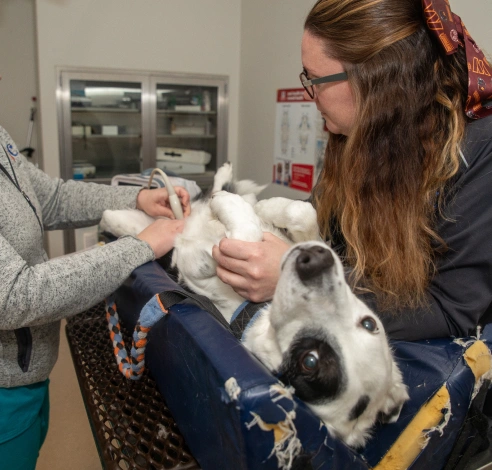
During the procedure, the technician will apply gel to the area that is being imaged and use a handheld device to record images of the area. The device uses ultrasonic sound waves to create detailed images without using radiation. There are no side effects to this procedure, but the fur typically needs to be shaved around the area being imaged to get an accurate analysis.